Pour oil into vinegar and watch what happens: they separate almost immediately, the oil rising in a shimmering layer above the denser liquid below. This is one of the most fundamental conflicts in the kitchen — fat and water simply do not want to coexist. Yet hollandaise sits in a glossy, velvety pool. Mayonnaise holds its shape on a spoon. A good vinaigrette clings to every leaf. The science behind all of this is emulsification, and understanding it doesn't just make you a more competent cook — it makes you a more informed eater.
Why Fat and Water Refuse to Mix
The incompatibility of fat and water is molecular. Water molecules are polar — they carry a slight electrical charge — which means they are strongly attracted to each other and form tight hydrogen bonds. Fat molecules are nonpolar. They carry no such charge and are repelled by water's electrical environment. When you shake a jar of oil and vinegar together, you create thousands of tiny droplets temporarily suspended in each other, but the moment the agitation stops, those droplets collide, merge, and the two phases separate again. This process is called coalescence, and it happens fast.
An emulsion is a stable dispersion of one liquid in another — specifically, tiny droplets of one phase scattered through the other. In cooking, we deal with two main types: oil-in-water emulsions, where fat droplets are suspended in a watery base (think vinaigrettes, mayonnaise, hollandaise), and water-in-oil emulsions, where water droplets are suspended in fat (butter is a classic example). The distinction matters both for texture and for how your body interacts with the nutrients in each.
The Role of Emulsifiers: Nature's Molecular Bridges
The key to making fat and water coexist is an emulsifier — a molecule with a split personality. One end of the molecule is hydrophilic (attracted to water), and the other is hydrophobic (attracted to fat). When an emulsifier is present, it positions itself at the boundary between fat droplets and the surrounding water, surrounding each droplet in a protective layer that prevents coalescence. The droplets stay small and dispersed rather than clumping back together.
The most familiar natural emulsifier in the kitchen is lecithin, and its most accessible source is the humble egg yolk. Lecithin, found naturally in egg yolks, acts as an emulsifier by having both hydrophilic and hydrophobic molecular ends, allowing it to bind water and fat together simultaneously. This is why egg yolk is the foundation of so many classic emulsified sauces — mayonnaise, hollandaise, béarnaise, aioli. A single yolk contains enough lecithin to emulsify a surprisingly large volume of oil.
The practical proof: traditional mayonnaise is a stable oil-in-water emulsion typically containing roughly 70–80% oil by weight, held together by egg yolk lecithin. That a small amount of lecithin can stabilize such a high proportion of fat into a cohesive, spreadable mass speaks to just how effective natural emulsifiers are at their job.
Mustard: The Vinaigrette's Secret Weapon
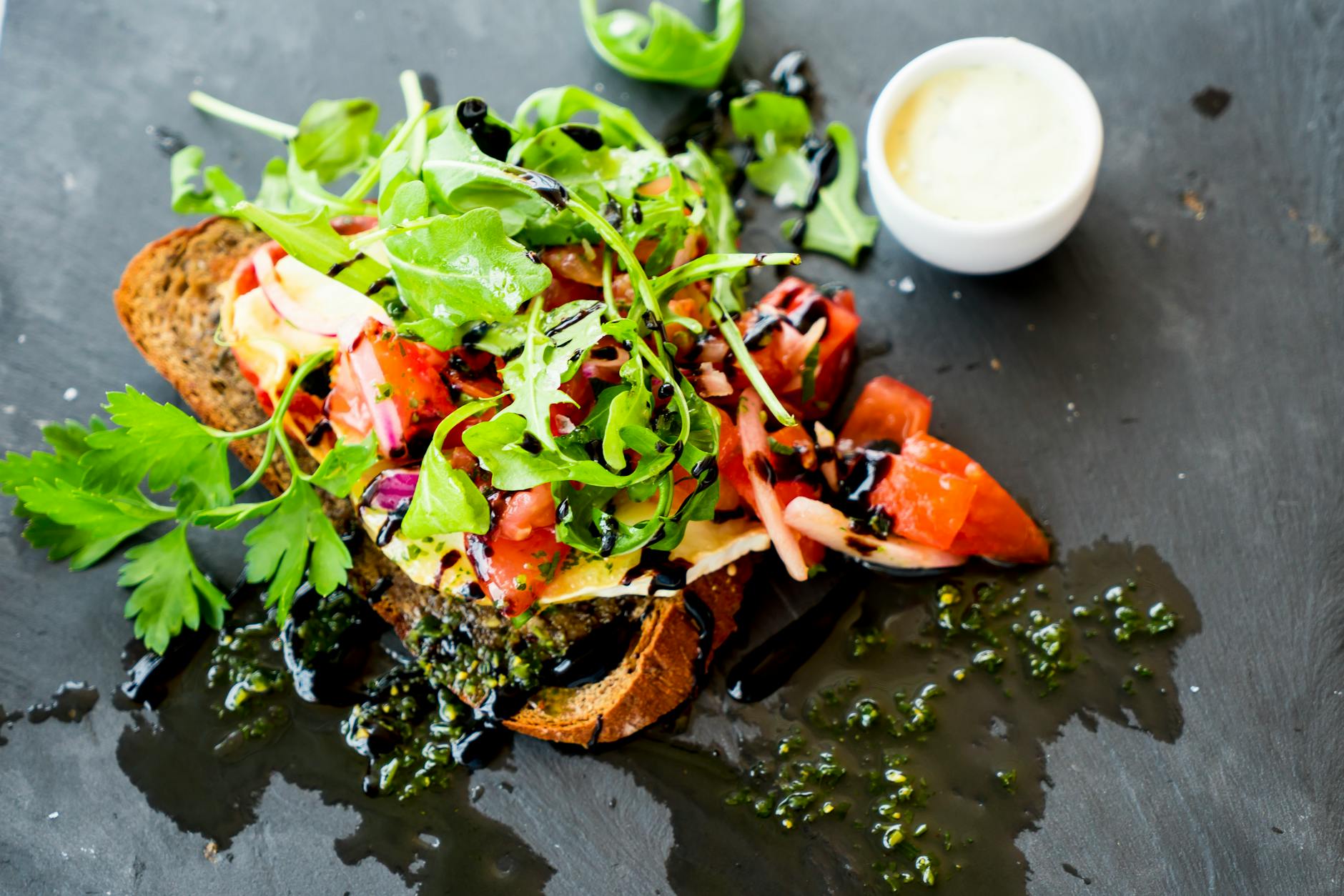
Egg yolks are not the only emulsifying agent in your pantry. If you've ever noticed that a vinaigrette made with a teaspoon of Dijon mustard holds together far longer than a plain oil-and-vinegar mixture, there's a specific reason for that. Mustard contains mucilage compounds that function as emulsifying agents, which is why a small amount of Dijon mustard helps stabilize vinaigrettes. Mucilage is a thick, gel-like substance produced by the mustard seed that coats fat droplets in much the same way lecithin does, slowing or preventing coalescence.
This explains a classic French technique: a well-made vinaigrette almost always includes a small amount of Dijon. It's not only about flavor. The mustard is doing structural work, buying you time before the dressing separates and ensuring a more consistent coating on your vegetables and greens.
Why Emulsified Dressings Are More Than Just Texture
Here is where emulsification moves from culinary technique into genuine nutritional territory. A salad is often thought of as automatically healthy, but the fat you eat it with — or don't — significantly affects what nutrients your body can actually absorb from it.
Fat-soluble vitamins A, D, E, and K require dietary fat present in a meal to be absorbed efficiently in the small intestine, making emulsified dressings on salads nutritionally significant. Many of the most valuable compounds in leafy greens, carrots, tomatoes, and other vegetables — including beta-carotene, lutein, and vitamins K and E — simply cannot be absorbed efficiently without fat present. Research has consistently shown that fat-free dressings dramatically reduce the bioavailability of these nutrients compared to full-fat alternatives.
An emulsified dressing takes this a step further. Because the fat is already broken into tiny droplets and distributed evenly, it coats ingredients more thoroughly than a separated, oily dressing would. The nutrients are surrounded by the very fat needed to carry them into your bloodstream. This is one of those cases where the tastier, richer option is also the more nutritious one — provided you're making it from real, whole ingredients rather than processed additives.
Making Emulsification Work Without Processed Additives
Commercial dressings and sauces often stabilize emulsions using industrial emulsifiers — xanthan gum, polysorbate 60, carrageenan — that extend shelf life and improve texture at scale. These aren't necessarily harmful, but they're unnecessary in a home kitchen where you have access to ingredients that do the same job more naturally.
Egg Yolk Emulsions
For mayonnaise, aioli, or any rich sauce, a single egg yolk whisked with a small amount of acid (lemon juice or vinegar) before you begin slowly adding oil is all you need. The acid helps break down the yolk's lecithin-containing membranes, making the emulsifier more available. Add the oil extremely slowly at first — almost drop by drop — until the emulsion is established. Once stable, you can pour more freely. If it breaks (turns greasy and separated), whisk a fresh yolk in a clean bowl and slowly beat the broken emulsion into it, re-emulsifying from scratch.
Mustard-Based Vinaigrettes
A reliable ratio for a basic vinaigrette is three parts oil to one part acid, with a teaspoon of Dijon mustard per four tablespoons of total dressing. Combine the acid, mustard, salt, and any other seasonings first, then whisk in the oil in a thin stream. The emulsion won't be as permanent as a mayonnaise — the droplet size is larger and there's less emulsifier present — but it will hold long enough to dress a salad properly, especially if you shake or whisk again just before serving.
Aquafaba for Plant-Based Cooking
If you avoid eggs, you have a genuinely effective alternative in your pantry whenever you open a can of chickpeas. Aquafaba — the liquid from cooked chickpeas — contains saponins and proteins that give it emulsifying and foaming properties, enabling it to substitute for egg yolks in plant-based emulsions. Aquafaba can be used to make vegan mayonnaise, and it whips like egg whites for meringue. About three tablespoons of aquafaba roughly replaces one egg yolk in emulsion applications. The result is not identical to egg-based mayo — the flavor is slightly different, and the emulsion can be somewhat less stable — but it performs remarkably well given that it is essentially the cooking water from a legume.
The Mechanics: Temperature, Technique, and Droplet Size
Beyond choosing the right emulsifier, the physical act of creating an emulsion matters. Smaller droplets mean a more stable emulsion — they have less tendency to collide and merge than larger ones. This is why vigorous whisking, blending, or processing produces better results than gentle stirring. An immersion blender makes spectacularly stable mayonnaise because its high-speed blade creates extremely small oil droplets in a fraction of the time required by hand.
Temperature plays a role too. Egg yolk lecithin works best at room temperature; cold yolks don't emulsify as readily, which is why classic French technique calls for bringing your eggs to room temperature before making mayonnaise or hollandaise. Fat that is too cold becomes solid and resists dispersion entirely.
Industrial food science applies these same principles at scale. Homogenization, the industrial process used to prevent cream from separating in commercial milk, is a mechanical form of forced emulsification that reduces fat globule size to around 1 micrometer. At that size, the fat droplets are too small to rise to the surface and separate — gravity barely affects them. The milk's own proteins then act as emulsifiers, coating the tiny droplets and keeping them stable. The principle is identical to what happens when you blend a vinaigrette; only the scale and machinery differ.
Troubleshooting: When Emulsions Break and How to Rescue Them
A broken emulsion — greasy, separated, curdled — is one of the more disheartening things that can happen mid-sauce. Understanding why it breaks helps you prevent and fix it.
Adding oil too fast is the most common culprit. If you pour oil faster than the emulsifier can coat the incoming droplets, the droplets merge before being stabilized, and the emulsion never forms properly. Always start slow.
Too little emulsifier is the second issue. If you're scaling up a recipe, scale your egg yolk or mustard accordingly. A single yolk has a finite capacity for stabilizing oil.
Heat can break protein-based emulsions like hollandaise by denaturing (cooking) the proteins in the egg yolk before they've done their emulsifying work. Hollandaise is made over gentle heat — a double boiler — specifically to keep the temperature low enough that the yolk cooks just enough to thicken, but not so much that it scrambles.
To rescue a broken mayonnaise or aioli: start fresh with a new yolk in a clean bowl and whisk the broken sauce into it slowly, treating it like fresh oil. The new yolk provides enough emulsifier to stabilize the existing mixture. For a broken vinaigrette, a blender often resolves the problem quickly by reducing droplet size mechanically.
Building a More Nutritious Kitchen Through Emulsification
Mastering emulsification means you can replace commercial dressings — which often contain additives, preservatives, and refined oils — with fresh versions made from whole ingredients like egg yolks, extra-virgin olive oil, mustard, and lemon juice. You control what goes in, you get a fresher flavor, and the natural emulsifiers in your ingredients do the stabilizing work that artificial additives handle in processed products.
More broadly, understanding that fat and water can work together — and that fat in a meal actively aids nutrient absorption — reframes the way you think about a plate of food. A salad dressed with a well-made vinaigrette isn't a guilty concession to richness. It's the nutritionally optimal way to eat it. The science of emulsification, it turns out, is also the science of eating well.
Sources
Every factual claim in this article was independently verified against the following sources:
- The Versatile Role of Eggs in Thickening and Emulsification - Agriculture Notes by Agriculture.Institute — agriculture.institute
- Dijon Mustard as an Emulsifying Agent - Savory Suitcase — savorysuitcase.com
- What To Know About Fat-Soluble Vitamins — health.clevelandclinic.org
- Milk Homogenization - an overview | ScienceDirect Topics — sciencedirect.com
- Aquafaba as an egg white substitute in food foams and emulsions: Protein composition and functional behavior - ScienceDirect — sciencedirect.com
- The Science Behind Mayonnaise: Understanding Emulsification and Texture - Maxwell Machinery — maxwell-machine.com