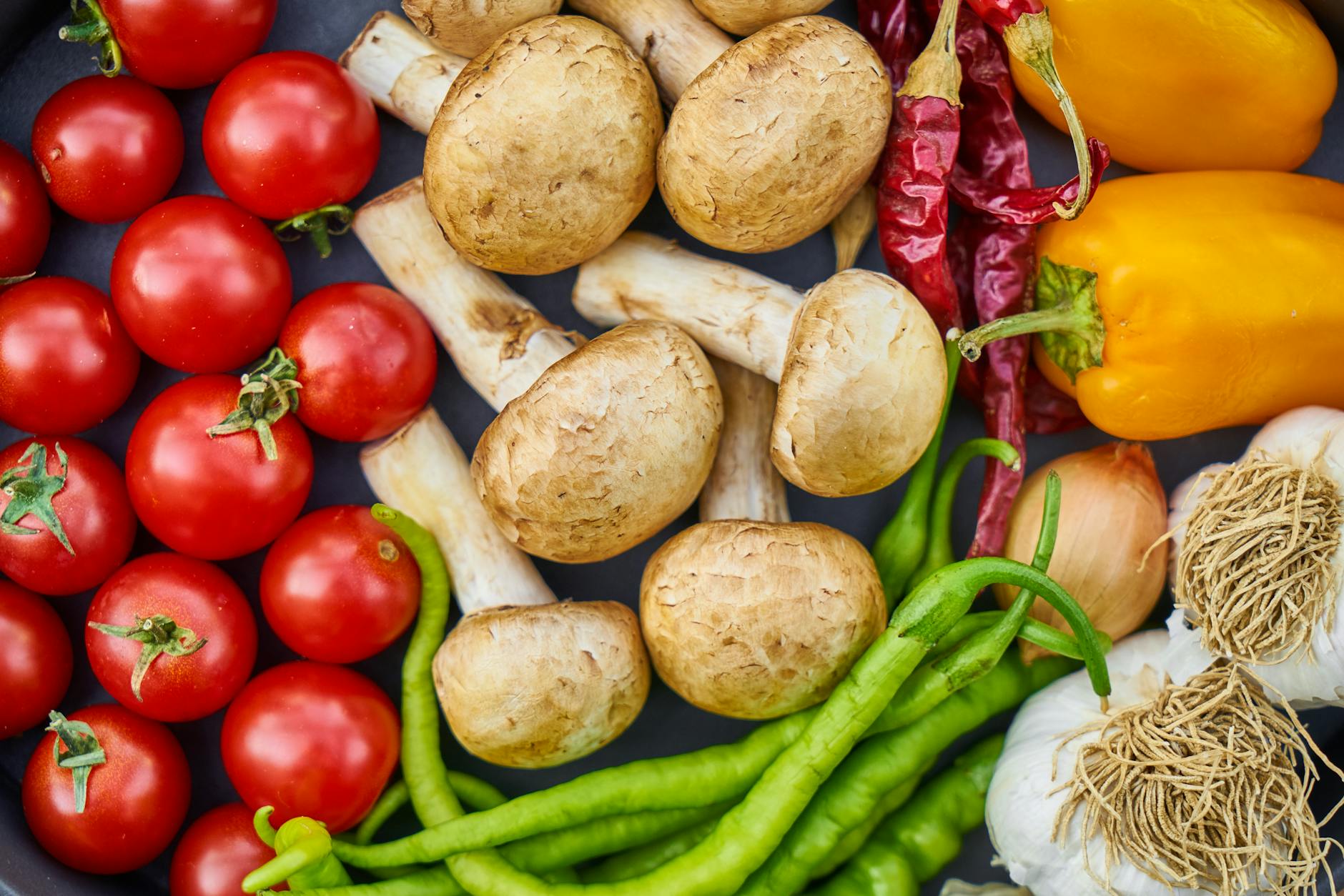
Most of us learn four tastes early on — sweet, sour, salty, bitter — and spend years cooking around them. But there is a fifth, older, and arguably more powerful force at work every time you eat a bowl of miso soup, a slice of aged parmesan, or a slow-roasted tomato. That force is umami, and it is not a vague concept or a marketing term. It is a measurable chemical phenomenon, traceable to specific molecules, and once you understand it, you will cook differently — using less salt, less fat, and getting more satisfaction from every meal.
What Umami Actually Is
Umami is the taste sensation produced primarily by free glutamate, an amino acid, along with two nucleotides: inosinate (IMP) and guanylate (GMP). These compounds bind to dedicated receptors on your tongue — receptors that are distinct from those that detect salt, sugar, or acid. The signal they send to your brain is often described as savory, brothy, or meaty, but those words undersell it. More precisely, umami creates a sense of fullness and roundness on the palate, a lingering coating sensation called kokumi in Japanese food science, and a perception that a dish is complete rather than flat.
Umami was identified as a distinct taste by Japanese chemist Kikunae Ikeda in 1908, who isolated glutamate from kombu seaweed as its primary source. Ikeda noticed that the broth made from kombu had a savory depth that could not be explained by salt or sweetness alone. He isolated the compound responsible, named the sensation umami — from the Japanese umai (delicious) and mi (taste) — and the field of umami science was born.
As an Amazon Associate, I earn from qualifying purchases.
It took most of the Western world another century to formally accept umami as a distinct taste category. Researchers confirmed the existence of specific glutamate receptors on the human tongue in the early 2000s, settling the debate. Umami is not a sensation your brain constructs from overlapping signals — it has its own dedicated biological pathway.
The Chemistry Behind the Sensation
Free Glutamate: The Core Compound
Glutamate is an amino acid found in almost every protein-containing food. But the key word is free. When glutamate is bound up inside a protein chain, you cannot taste it. Only when it is liberated — through fermentation, aging, cooking, or enzymatic breakdown — does it become available to your taste receptors. This is why a fresh tomato has some umami character, but a slow-roasted or sun-dried tomato has dramatically more. The heat breaks down proteins and concentrates free glutamate.
Nucleotides: The Force Multipliers
IMP and GMP are nucleotides that do something remarkable on their own: not much. Their umami intensity in isolation is relatively low. But when they are combined with free glutamate, the effect is synergistic, not additive. The perceived umami intensity can increase many times over compared to glutamate alone. This synergy is the secret behind why certain food combinations — parmesan on a tomato sauce, dried mushrooms in a meat broth, bonito flakes with kombu — taste so much more satisfying than either ingredient on its own.
IMP is found predominantly in animal proteins, particularly fish and meat. GMP is the nucleotide associated with dried mushrooms, especially shiitake. Traditional cooking cultures around the world, without any knowledge of the underlying chemistry, arrived at combinations that exploit exactly this synergy.
As an Amazon Associate, we earn from qualifying purchases.
Where Umami Hides in Whole Foods
You do not need processed ingredients or flavor enhancers to build umami. The whole food kingdom is full of it, often in ingredients you already use.
Vegetables and Fungi
Tomatoes — especially when concentrated, sun-dried, or fermented into paste — are one of the richest plant sources of free glutamate. Ripe tomatoes contain notably higher levels than unripe ones, which explains why a peak-season tomato tastes so much more satisfying. Mushrooms, particularly dried shiitake, are exceptional sources of GMP. When you rehydrate dried shiitake and use that soaking liquid in a dish, you are adding a concentrated shot of umami compounds directly to your cooking. Corn, peas, and potatoes also contribute meaningful amounts of free glutamate. Vegetables that are fermented — think kimchi, sauerkraut, or miso — have had their glutamate liberated through microbial activity, making them umami powerhouses.
Aged and Fermented Foods
Time and microbes are the two most powerful umami-generating forces available in a kitchen. Aged cheeses like parmesan and pecorino romano accumulate free glutamate as proteins break down over months and years. Parmesan is among the highest-glutamate foods measured — a small grating adds a level of savory depth that would require much more salt to approximate. Fermented soy products — miso, soy sauce, tempeh — are similarly dense in umami compounds because the fermentation process dismantles the protein structure of soybeans and releases free glutamate at scale. Fish sauce and Worcestershire sauce work on the same principle: long fermentation of protein-rich ingredients yields a liquid dense with free amino acids.
Seaweed
Kombu, the dried kelp that Ikeda studied, remains one of the most concentrated natural sources of free glutamate available. A strip of kombu simmered in water makes dashi, the foundational Japanese stock, which is essentially umami in liquid form. It requires no meat, no hours of simmering bones, and almost no skill. The result is a broth with remarkable depth that can underpin soups, braise vegetables, or form the base of sauces.
Meat and Fish
Meat that has been aged, slow-cooked, or cured accumulates free glutamate and IMP as its proteins denature and break down. This is part of why a slow-braised short rib or a long-cooked chicken stock tastes so much more satisfying than a quickly cooked piece of the same protein. Anchovies — especially oil-packed, salt-cured ones — are a particularly accessible and powerful umami source. A few fillets melted into olive oil at the start of cooking almost invisibly elevate the entire dish without any discernible fishiness.
How to Use Umami to Cook Better
Build Layers, Not Just Seasoning
The most practical shift umami knowledge creates is a move away from seasoning as an afterthought. Salt added at the end of cooking masks flatness. Umami built throughout cooking eliminates that flatness from the start. Begin with an umami-rich base — sweat onions and garlic, add a spoonful of tomato paste, let it caramelize slightly — and the dish starts with depth rather than requiring rescue later.
Exploit the Synergy Deliberately
Now that you know glutamate and nucleotides amplify each other, you can combine ingredients intentionally. Add dried mushrooms or mushroom powder to a tomato-based sauce. Stir a little miso into a vegetable broth before using it to braise beans. Grate parmesan over roasted tomatoes. These are not random pairings — they are chemistry. Exploring Asian flavors like dashi, miso, and fermented black beans is one of the most effective ways to incorporate synergistic umami combinations into everyday cooking.
Use Umami to Reduce Salt and Fat
This is where the nutritional value becomes concrete. Salt and fat are two of the primary tools cooks use to make food taste satisfying. Both have their place, but both can be reduced significantly when umami is doing its job. Free glutamate activates the same reward pathways in the brain that make rich, salty food feel complete. Research has shown that incorporating umami-rich ingredients allows meaningful reductions in sodium content without a corresponding drop in perceived palatability — a genuine benefit for anyone managing blood pressure or cardiovascular health.
The same principle applies to fat. A thin broth with high umami intensity feels more satisfying and coating on the palate than a low-umami broth given body with butter or cream. This does not mean avoiding fat — it means not needing to use fat as a proxy for depth you could get from better-chosen ingredients.
Cook for Concentration
Heat and time both liberate and concentrate glutamate. Roasting vegetables until caramelized, reducing stocks, sun-drying or oven-drying tomatoes, slow-cooking meat — all of these techniques increase umami intensity by breaking down proteins and driving off water. A raw mushroom and a deeply sautéed one contain the same compounds, but the sautéed version has lost moisture, increasing the concentration of umami compounds per bite and undergoing additional breakdown through heat.
Keep Umami Boosters on Hand
A short list of inexpensive pantry staples functions as an umami toolkit: dried kombu, dried shiitake mushrooms, good quality miso (any variety), anchovy paste or oil-packed anchovies, tomato paste, soy sauce or tamari, and a wedge of aged hard cheese. None of these need to be used in large quantities. Often a teaspoon or a few grams is enough to shift a dish from adequate to genuinely satisfying. This kind of cooking is efficient — you get more flavor from less ingredient — which also happens to be economical.
A Note on MSG
No discussion of umami compounds is complete without addressing monosodium glutamate. MSG is simply sodium combined with glutamate — the same molecule your body produces naturally and that is abundant in parmesan, tomatoes, and soy sauce. The compound is chemically identical whether it comes from a fermentation vat or from a slow-roasted piece of meat. Decades of scientific review have not established any link between MSG and adverse health effects in the general population at culinary doses. Understanding this matters because MSG, used judiciously, is just another way to deliver free glutamate — no different in principle from a spoonful of miso or a grating of aged cheese, though obviously far more concentrated.
The Bigger Picture
Umami is not a trick or a shortcut. It is a window into why certain foods and cooking traditions have endured for centuries — because they deliver satisfaction efficiently. Japanese dashi, Italian slow-cooked ragù, Korean doenjang jjigae, a good French onion soup: these dishes come from different cultures and contain different ingredients, but they are all, whether their inventors knew it or not, exercises in umami chemistry.
Learning to think in terms of free glutamate and nucleotide synergy gives you a framework for understanding why dishes work — and why they sometimes do not. A soup that tastes thin despite correct seasoning is usually missing umami, not salt. A salad dressing that lacks staying power often needs an anchovy or a teaspoon of miso more than it needs another pinch of salt. Once you start recognizing the patterns, the fifth taste stops being mysterious and becomes one of the most reliable tools in your kitchen.
Sources
Every factual claim in this article was independently verified against the following sources:
- Kikunae Ikeda — en.wikipedia.org