Most of us have been told at some point to eat our vegetables raw to get the most nutrition out of them. The reality, as with most things in nutrition science, is considerably more interesting than that simple rule suggests. How you cook a vegetable — the temperature you use, how long you apply heat, and whether water is involved — can either protect its nutritional value, destroy it, or in some surprising cases, actually improve it. Understanding the basic science behind these changes helps you make smarter choices in the kitchen every day.
Why Cooking Changes Nutritional Content at All
Vegetables are living plant tissue made up of cells, cell walls, membranes, and a complex chemistry of vitamins, minerals, antioxidants, and phytochemicals. When you apply heat, several things happen simultaneously. Cell walls soften and break down, which can release some compounds and make others more accessible. Heat-sensitive molecules — particularly certain vitamins — begin to degrade. And if water is present, water-soluble nutrients can leach out of the vegetable entirely and into the cooking liquid.
Not all nutrients behave the same way. It helps to think about them in two broad categories: water-soluble and fat-soluble. Water-soluble vitamins like vitamin C and the B vitamins are particularly vulnerable to both heat and leaching into water. Fat-soluble compounds like beta-carotene, lycopene, and vitamins A, D, E, and K are generally more heat-stable, and some actually become easier for the body to absorb after cooking. Minerals sit somewhere in between — they don't degrade from heat the way vitamins do, but they can still leach into cooking water.
The Biggest Culprit: Boiling
Boiling is the method most associated with nutrient loss, and for good reason. It combines two damaging factors at once: sustained heat and large amounts of water. Water-soluble vitamins migrate out of the vegetable and dissolve into the surrounding liquid. Unless you're making soup and consuming that liquid, those nutrients go down the drain.
Boiling broccoli can cause losses of up to 50% of its vitamin C content compared to raw, according to studies measuring water-soluble vitamin leaching. That's a substantial reduction from one of broccoli's most celebrated nutrients. The longer you boil, and the more water you use, the more pronounced this effect becomes.
Glucosinolates in cruciferous vegetables like broccoli and cabbage are sensitive to heat, and prolonged boiling degrades both the compounds and the myrosinase enzyme needed to activate them. This matters because glucosinolates are the precursors to compounds like sulforaphane, which researchers have studied extensively for its potential health benefits. Destroying the enzyme that converts glucosinolates into their active forms is a significant loss, one that goes beyond simple vitamin depletion.
If you do boil vegetables, the practical takeaway is to use as little water as possible, cook for the shortest time that achieves the texture you want, and consider using the cooking water in stocks or sauces rather than discarding it.
Steaming: The Smarter Water-Based Option
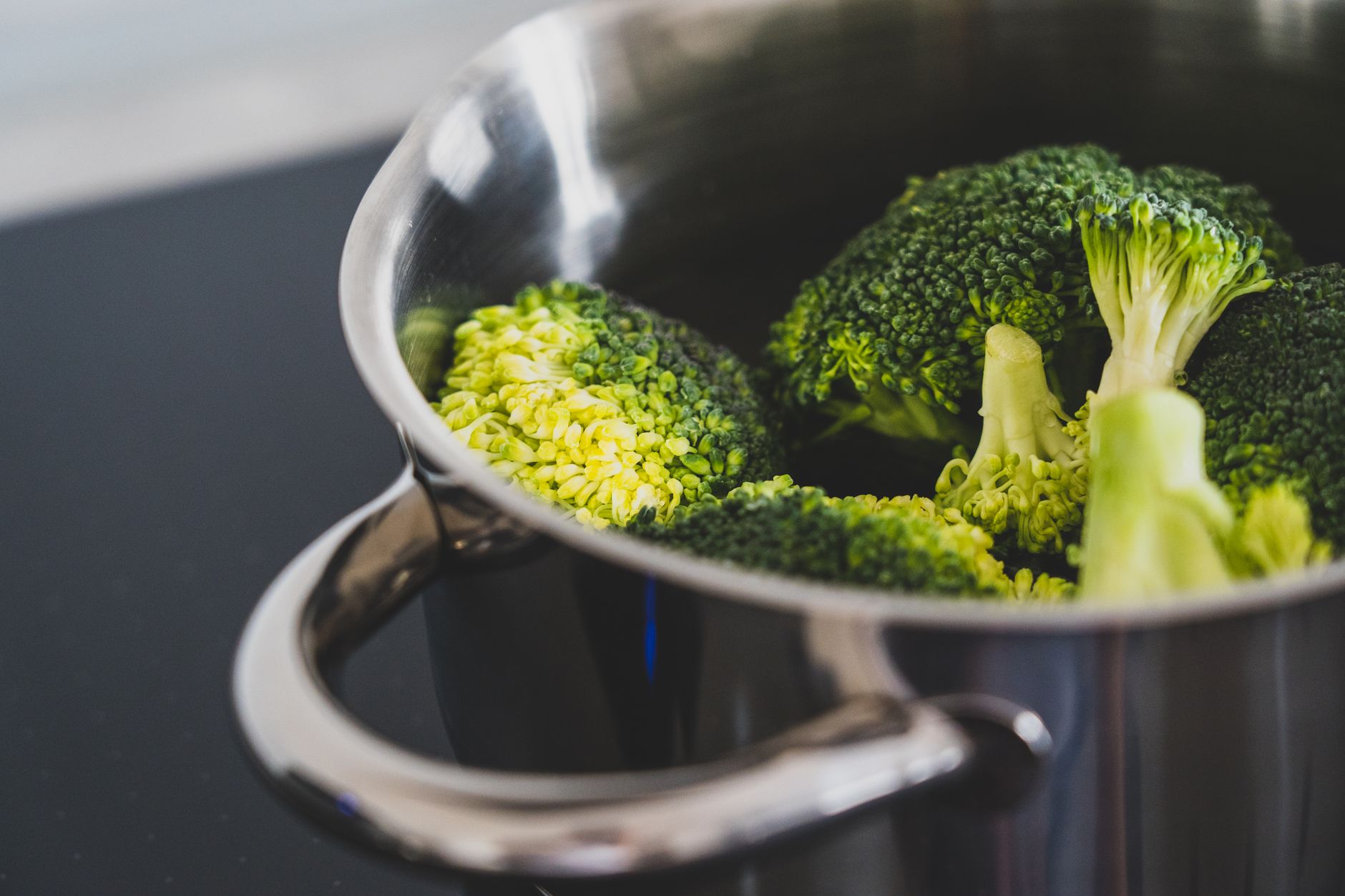
Steaming uses heat and moisture but avoids submerging the vegetable in water. The vegetable sits above boiling water and cooks in the hot vapor. This distinction turns out to matter enormously for nutritional retention.
Steaming vegetables retains significantly more water-soluble vitamins — B vitamins and vitamin C — than boiling, because nutrients do not leach into cooking water. Since the vegetable never sits in liquid, there's nowhere for those vitamins to go. Some loss to heat still occurs, particularly with vitamin C, but it's considerably smaller than what boiling causes.
Steaming also tends to preserve texture and color well, which is a reliable indicator that you haven't overcooked the vegetable into nutritional oblivion. Bright green broccoli or vivid orange carrots after steaming signal that you've kept cooking time appropriately short. The moment vegetables turn drab and army-colored, prolonged heat has already done significant damage.
Microwaving: A Surprisingly Good Option
The microwave has a reputation as a nutritional shortcut, but the science actually supports it as one of the better cooking methods for preserving certain nutrients. The reason comes down to time and water. Microwaving is fast, and it typically uses little or no added water.
Microwaving vegetables has been shown in multiple studies to preserve more vitamin C than boiling, largely because of shorter cooking times and minimal water use. Both of the factors that destroy water-soluble vitamins — heat exposure duration and water contact — are minimized in a microwave. A few minutes in the microwave with a splash of water compares very favorably to ten minutes of full boiling.
The key is not to add excessive water to the container and to avoid overcooking. Microwaving until a vegetable is mushy defeats the purpose. The goal is just-tender, and at that point, nutritional retention is genuinely competitive with steaming.
Stir-Frying: High Heat, Short Time
Stir-frying operates on a principle opposite to boiling: it uses very high heat but applies it for a very short time, and it uses no water at all. The small amount of oil involved is an asset rather than a liability for fat-soluble nutrients.
Stir-frying vegetables at high heat for short periods is generally considered a nutrient-preserving method because rapid cooking minimizes both heat exposure time and water contact. The brief time in the wok means heat-sensitive vitamins don't have long to degrade, and without water, there's no leaching. The result is a method that produces cooked vegetables with much of their nutritional profile intact.
The oil used in stir-frying also actively helps with fat-soluble compounds. Beta-carotene, lycopene, and other carotenoids are absorbed far more efficiently when consumed alongside dietary fat, which stir-frying naturally provides.
Roasting: Where Nutrition Gets More Complicated
Roasting involves dry heat at relatively high temperatures over longer periods — typically 180 to 220°C (350 to 425°F) for 20 minutes or more. This means no water leaching, which protects minerals and slows the loss of some water-soluble vitamins, but the extended heat exposure does cause more degradation of heat-sensitive compounds than a quick stir-fry or steam.
For carotenoid-rich vegetables like sweet potatoes, butternut squash, and carrots, roasting is actually a reasonable choice. These fat-soluble compounds are relatively heat-stable, and the cooking process can improve their bioavailability. Roasted vegetables also typically get eaten with or immediately after cooking without the nutrient-depleting step of sitting in hot water, which matters for overall retention.
The browning that happens during roasting — the Maillard reaction — does modify some amino acids and sugars in ways that reduce specific nutritional components, but for most vegetables, this is a minor concern compared to the benefits of avoiding water-based leaching.
When Cooking Actually Improves Nutrition
Here's where the "raw is always best" assumption really falls apart. For a meaningful number of vegetables and nutrients, cooking improves the story.
Cooking tomatoes increases the bioavailability of lycopene, a carotenoid antioxidant, because heat breaks down cell walls releasing it from the plant matrix. Raw tomatoes contain lycopene, but much of it is bound within plant cell structures in a form the body doesn't absorb efficiently. Heat disrupts those structures, freeing the lycopene and making it available for absorption. Cooked tomato products — sauces, soups, roasted tomatoes — are actually superior sources of bioavailable lycopene than a slice of raw tomato.
Beta-carotene in carrots becomes more bioavailable after cooking, particularly when consumed with a small amount of dietary fat, due to its fat-soluble nature. Raw carrots contain abundant beta-carotene, but the body struggles to extract it from the rigid, uncooked cell walls. Cooking softens those walls, and the presence of fat — even a small amount of olive oil in a roast or a light dressing — dramatically improves how much beta-carotene your body actually absorbs and converts to vitamin A.
Spinach is another instructive case. Raw spinach contains oxalic acid, which binds to calcium and iron and inhibits their absorption. Cooking reduces oxalate levels, meaning lightly cooked spinach can actually deliver more accessible calcium and iron than an equivalent amount eaten raw.
Practical Guidelines by Vegetable Type
Cruciferous Vegetables (Broccoli, Cabbage, Brussels Sprouts, Cauliflower)
These are most nutritionally vulnerable to prolonged boiling, which destroys both glucosinolates and the enzyme needed to activate them. Steam, stir-fry, or roast briefly. If you want to preserve glucosinolates and their activated compounds, consider eating some raw or very lightly cooked, or adding raw mustard seeds (which contain myrosinase) to cooked cruciferous vegetables — a food-science trick that can help restore the activation pathway.
Orange and Yellow Vegetables (Carrots, Sweet Potatoes, Squash)
Cooking improves the bioavailability of their key nutrients. Steam, roast, or stir-fry, and consume with a small amount of fat. These vegetables are relatively forgiving to cook because their main valuable compounds — carotenoids — are heat-stable and fat-soluble.
Tomatoes and Red Peppers
Tomatoes benefit from cooking for lycopene bioavailability. Red peppers, on the other hand, are extremely rich in vitamin C — one of the most concentrated sources — so raw or very lightly cooked is better if vitamin C is your priority. Roasting peppers until charred destroys a meaningful portion of that vitamin C.
Leafy Greens (Spinach, Kale, Swiss Chard)
Light cooking is generally beneficial for bioavailability of minerals. Avoid boiling for extended periods and discard as little cooking liquid as possible. A quick sauté or steam is preferable to prolonged boiling.
The Takeaway: Context Is Everything
There is no single "best" way to cook all vegetables because different vegetables have different nutritional profiles and different vulnerabilities. The general principles that hold across most vegetables are these: minimize cooking time, minimize water contact (or consume the water), and match the cooking method to the vegetable's dominant nutritional assets.
Steaming and stir-frying are the most consistently protective methods for water-soluble vitamins. Roasting and cooking with fat are advantageous for fat-soluble carotenoids. Microwaving, despite its unglamorous reputation, is genuinely competitive with steaming for preserving heat-sensitive vitamins. And for some vegetables, raw is not actually the nutritional pinnacle — cooking unlocks what their chemistry has to offer.
The best cooking method is ultimately the one that makes you eat more vegetables. A steamed broccoli you won't touch does less for your health than a well-roasted one you actually enjoy. But where you have flexibility in preference, these distinctions are real and worth building into your habits.
Sources
Every factual claim in this article was independently verified against the following sources:
- Neither boiled nor raw : the best way to cook broccoli to preserve maximum antioxidant vitamins – VWC News — vwc.org.au
- Effect of different cooking methods on the content of vitamins and true retention in selected vegetables - PMC — pmc.ncbi.nlm.nih.gov
- Heat, Shape and Type: Increasing Lycopene Absorption — aicr.org
- Comparative bioavailability of β-carotene from raw carrots and fresh carrot juice in humans: a crossover study - PMC — pmc.ncbi.nlm.nih.gov
- Engineering Brassica Crops to Optimize Delivery of Bioactive Products Postcooking - PMC — pmc.ncbi.nlm.nih.gov
- How Cooking Affects the Nutrient Content of Foods — healthline.com