Most people who try meal prepping hit the same wall around Wednesday: the food is technically still good, but eating the same container of chicken and brown rice for the fourth time in a row has become a small act of endurance. By Friday, the remaining portions go untouched. The food gets tossed, the motivation fades, and the whole experiment is quietly abandoned.
The problem isn't meal prepping itself — it's the way most of us approach it. Cooking complete meals in bulk locks you into a single flavor, texture, and combination for the entire week. Cook components instead, and you build a flexible pantry of ready-made building blocks that can become a grain bowl on Monday, a wrap on Tuesday, a stir-fry on Wednesday, and a soup on Thursday — all from a single Sunday session. This is the real secret behind sustainable healthy meal prep ideas for the week.
The Core Idea: Build a Personal Ingredient Library
Component-based meal prep treats your refrigerator like a well-stocked larder rather than a row of identical lunch boxes. Instead of assembling finished dishes, you prepare categories of ingredients that mix and match freely across different meals and cuisines.

As an Amazon Associate, I earn from qualifying purchases.
The three pillars of a useful component library are:
- A cooked grain or starchy base — something that absorbs flavors and provides satisfying bulk.
- One or two proteins — kept simple and lightly seasoned so they're versatile rather than committed to a single dish.
- A variety of prepared vegetables — roasted, blanched, or raw-prepped, depending on how you intend to use them.
Add a handful of sauces, dressings, and garnishes to your weekly lineup, and those three categories become essentially endless in their combinations.
Choosing Your Grains and Bases
A cooked grain is arguably the highest-value item you can prep. It takes almost no active work, stores reliably in the refrigerator for four to five days, and serves as the foundation of everything from salads to soups to breakfast porridge.
Good candidates include:
As an Amazon Associate, we earn from qualifying purchases.
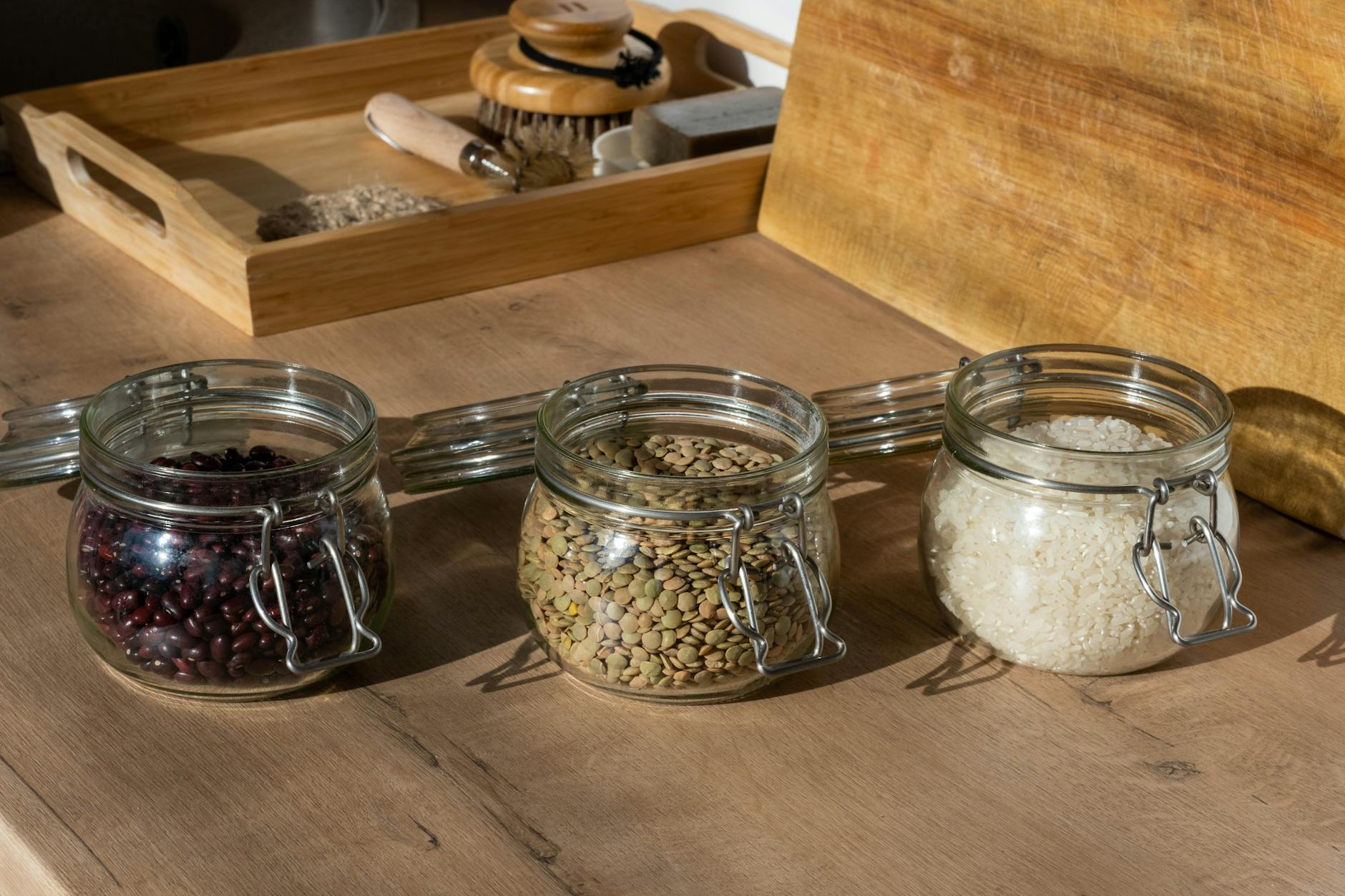
- Brown rice or white rice — universally versatile, pairs with Asian flavors, Latin dishes, curries, and simple stir-fries alike.
- Farro or barley — chewy, nutty grains that hold up well in hearty salads and work beautifully in Mediterranean-leaning bowls.
- Quinoa — a complete protein source that doubles as a grain substitute and a lighter salad base.
- Lentils — technically a legume, but function like a grain in many contexts; they bulk up soups and salads while contributing significant fiber and plant-based protein.
Cook your grain of choice plain or with just broth and a bay leaf. Avoid heavy seasoning at this stage — you want the base to be a blank canvas that takes on the character of whatever sauce or spice profile you apply later in the week. If you'd like to explore how grains and legumes contribute to a balanced diet, the variety available is genuinely wide.
Proteins: Keep Them Simple and Neutral
The biggest mistake in protein prep is over-seasoning. A batch of heavily spiced chicken thighs might be wonderful the first night but feels out of place on a salad two days later. The goal is a lightly flavored protein that can take direction from whatever you pair it with.
Practical protein options
Baked or poached chicken breast or thighs — season with just salt, pepper, and a neutral fat. Slice or shred after cooking, and it becomes the base for everything from tacos to grain bowls to pasta.
Hard-boiled eggs — one of the most underrated prep items. They keep well, require zero equipment beyond a pot, and serve as protein for breakfast, salads, or a quick standalone snack.
Roasted chickpeas or white beans — a satisfying plant-based alternative that works equally well warm or cold. Season them lightly with olive oil and salt, and add spices per-meal.
Baked salmon or firm white fish — slightly more delicate but preps beautifully and flakes into salads, rice bowls, or wraps. Keep seasoning minimal: lemon, olive oil, salt.
The unifying principle is restraint at the prep stage. Sauce and season boldly when you assemble — not when you cook.
Vegetables: Roasted, Blanched, and Raw
Vegetables are where component prep pays off most visibly. Roasting a large sheet pan of mixed vegetables on Sunday takes about 35 minutes of largely hands-off time and produces something that is genuinely delicious all week — arguably better on day two than day one, once the flavors have settled.
Roasting
Cut root vegetables, cruciferous vegetables, and squashes into uniform pieces, toss with olive oil and salt, and roast at high heat until caramelized and tender. Good candidates: sweet potato, cauliflower, broccoli, zucchini, red onion, beets, and bell peppers. Roasted vegetables are sweet, savory, and work in warm and cold applications equally well.
Blanching
Blanching vegetables in boiling water and then shocking them in ice water halts enzymatic activity, preserving color, texture, and some heat-sensitive nutrients. This technique is especially useful for green vegetables — green beans, snap peas, broccolini, asparagus — that you want to remain bright and crisp rather than soft. A blanched green bean has a completely different character than a roasted one, giving you textural variety within the same prep session without extra effort.
Raw prep
Some vegetables simply need washing, peeling, and cutting to become ready-to-use components: shredded cabbage or carrots for slaws, sliced cucumber and cherry tomatoes for salads, washed and dried salad greens stored with a paper towel to absorb moisture. Raw components require zero cooking and dramatically reduce the friction of assembling a meal mid-week.
Sauces and Dressings: The Real Flavor Architects
If components are the instruments, sauces are the composer. The same grain bowl with tahini-lemon dressing tastes nothing like the same grain bowl with a ginger-soy vinaigrette or a romesco sauce. Preparing two or three sauces during your prep session multiplies the variety available to you all week without any additional cooking.
High-return sauces to consider:
- Tahini dressing — tahini, lemon juice, garlic, and water. Works on everything from roasted vegetables to grain bowls to falafel-style plates.
- Simple vinaigrette — olive oil, acid (lemon or vinegar), mustard, and seasoning. Endlessly variable by changing the acid or adding herbs.
- Ginger-soy sauce — soy sauce, sesame oil, fresh ginger, rice vinegar, and a touch of honey. Transforms plain rice and protein into a complete Asian-inspired meal.
- Herby yogurt — plain yogurt blended with herbs, garlic, and lemon. Doubles as a dip and a dressing.
Most of these take five to ten minutes to prepare and keep well in the refrigerator for the full week.
Putting It Together: A Sample Week in Practice
To make this concrete, here is how a single prep session — one batch of farro, roasted sweet potato and cauliflower, blanched green beans, a tray of baked chicken, and two sauces (tahini and ginger-soy) — could realistically produce a varied week of lunches and dinners:
- Monday lunch: Farro bowl with roasted vegetables, sliced chicken, tahini dressing, and cherry tomatoes.
- Monday dinner: Chicken stir-fried with green beans and ginger-soy sauce, served over farro.
- Tuesday lunch: Chicken and roasted cauliflower wrap with herby yogurt and shredded cabbage.
- Wednesday lunch: Cold farro salad with green beans, chickpeas, feta, and vinaigrette.
- Wednesday dinner: Sweet potato and chicken soup — sauté aromatics, add broth, add prepped components, simmer briefly.
- Thursday lunch: Simple grain bowl with whatever components remain, a fried egg on top, and whatever sauce you haven't used yet.
Six distinct meals. One prep session. No repeated combinations.
Storage: Making Components Last
Component prep only works if the ingredients stay genuinely good throughout the week. A few practical guidelines:
- Store grains and proteins in airtight containers. Cooked grains typically keep four to five days refrigerated; cooked chicken three to four days.
- Keep roasted and blanched vegetables separate from raw ingredients, as they have different storage needs and lifespans.
- Store dressings in small jars and dress only what you're eating — not the whole container of salad greens.
- If you're prepping for a full five-day week, consider freezing half a grain batch rather than refrigerating it all. Cooked grains freeze and reheat very well.
- Label containers with the prep date. It sounds pedantic until you're staring at two identical containers of farro wondering which one is from last week.
Planning Your Session: Efficiency Over Perfection
A good component prep session takes roughly one to two hours, including cleanup. The key is to run everything in parallel rather than sequentially. While grains simmer on the stove and vegetables roast in the oven, you can blanch green beans on a back burner and make a dressing on the counter. The active hands-on time is far shorter than the total clock time.
A practical sequence:
- Start the grain — it takes the longest and needs the least attention.
- Get proteins into the oven or onto the stove.
- Cut and season roasting vegetables, add to the oven.
- Blanch and shock green vegetables.
- Prep raw vegetables while everything cooks.
- Make sauces last, while the cooked items cool before storing.
The goal isn't an exhaustive prep of every ingredient you might possibly need. Start with one grain, one protein, two or three vegetable preparations, and two sauces. That's enough to build genuine variety without making Sunday afternoon feel like a catering shift.
Why This Approach Supports Healthier Eating Naturally
Beyond the practical flexibility, component-based prep tends to support better nutritional variety by design. When you cook components rather than fixed meals, you naturally incorporate a wider range of vegetables, proteins, and whole grains across the week — rather than optimizing for one dish and eating it repeatedly. Variety in the diet is one of the more consistently supported principles in nutrition, both for micronutrient coverage and for maintaining a diverse and resilient gut environment.
It also removes the main psychological friction that derails healthy eating mid-week: the moment when you're hungry, tired, and the only option is either something uninspiring from the fridge or something convenient and less nutritious from outside. With a stocked component library, assembling something genuinely good takes about five minutes. That gap — between the effort of eating well and the ease of not — is where most healthy habits either survive or collapse.
Component prepping doesn't require a rigid plan or a perfect system. It just requires shifting the question from "what meals will I eat this week?" to "what ingredients do I want to have available?" That small change in framing produces a fundamentally more flexible, varied, and sustainable approach to eating well throughout the week.
Sources
Every factual claim in this article was independently verified against the following sources:
- Blanching (cooking) — en.wikipedia.org

